60's Shirt Wide Sleeves 60's Hippie Fashion Tumblr
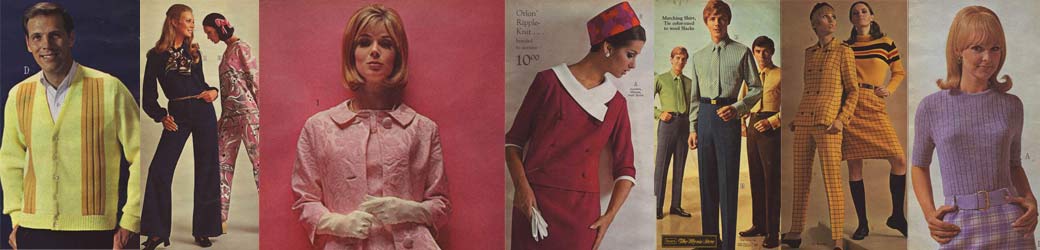
1960s fashion was bi-polar in just well-nigh every way. The early sixties were more reminiscent of the 1950s — conservative and restrained; certainly more than archetype in way and design.
The late 1960s were the exact opposite. Bright, swirling colors. Psychedelic, tie-dye shirts and long hair and beards were commonplace. Woman wore unbelievably brusque skirts and men wore tunics and capes. The foray into fantasy would not have been believed by people just a decade earlier.
Information technology's almost like the 1950s bottled everyone up so much that the late 1960s exploded like an old pressure cooker. Women were showing more skin than ever before.
For the outset time in the 19th Century, London, not Paris, was the center of the fashion world. The British Invasion didn't stop with The Beatles. Information technology swept into all parts of life, especially clothing.
Only actually, lost in the two extremes is the mid-60s, which I think actually had the coolest fashion, albeit more subtle. I love the long, slender shapes, the bright colors and the young, London look. I have always wished the Mod style stuck around a little longer.
Keep reading beneath for details, covering every year from 1960-1969.
QUICK REFERENCE LINKS
1960s Fashion Timeline
1960 | 1961 | 1962 | 1963 | 1964 | 1965 | 1966 | 1967 | 1968 | 1969
1960s Fashion: In-Depth Profiles
1960s Fashion: Pictures
In-Depth 1960s Fashion Profiles
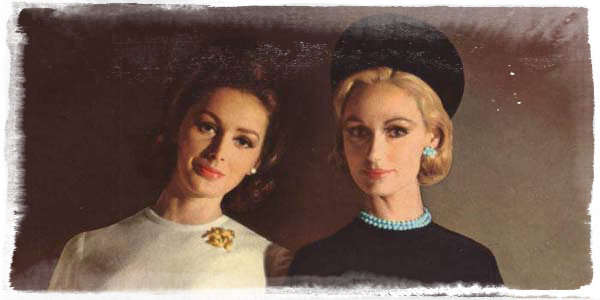
1960s Fashion: Women & Girls »
Women'south fashion trends & styles in the 1960s varied greatly. The early 60s had box dresses, the mid-60s took cues from London and the belatedly 60s got crazy!
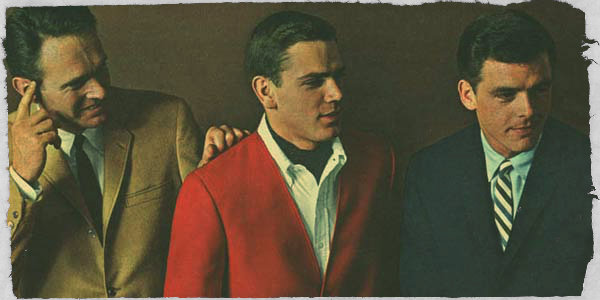
1960s Fashion: Men & Boys »
Changes in men'southward fashion & mode in the 1960s were simply as drastic for men every bit they were for women. The differences between 1961 & 1969 are staggering.
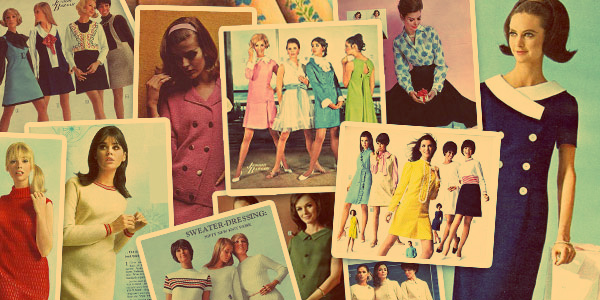
1960s Dresses & Skirts: Styles, Trends & Pictures »
Dresses in the 1960s came in all shapes, colors and fabrics. Skirts varied in length, from talocrural joint to super-short. It was a time of bang-up experimentation.
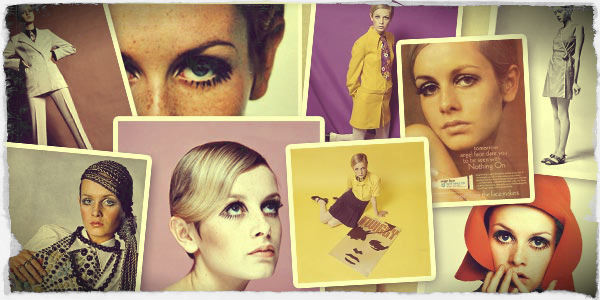
Twiggy: Pictures, Bio & Model Profile »
At just seventeen-yr-erstwhile, Twiggy set the standard for manner in 1967. The British awareness brought the age of the mini-mod into full force.
Manner in 1960
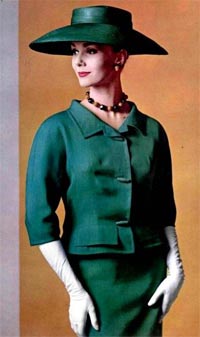
Givenchy adapt (1960)
Although the 1960s are best known as a decade of experimentation, it didn't start out that way in the fashion world. While there were several of import tweaks to the status quo, no revolutionary new footing had been broken.
The typical daytime expect consisted of a bulbous hat over a high bouffant crew, silhouettes with deep armholes an wide sleeves, and a rounded jacket that tapered in at the hem.For evening, the slender look was in. Long-waisted dresses, often with an overblouse, replaced the fitted waistline and full skirt.
Contemporary architecture and sculpture were the most prevalent inspirations for way designers in 1960. There were likewise hints of the twenties and thirties with bloused, bias-cutting clothes, long straight overblouse and sashed tunics, short skirts, closely plumbing fixtures hats and exaggerated makeup (especially red lips) and short pilus.
Culottes, divided skirts and trim trouser skirts were introduced for travel, street wear and evenings at abode. Bead and sequin embroidered evening dress sparkled the night away. The long dress of sequins or crystal chaplet had replaced the bouffant dress.
Skirts got a little fleck shorter in 1960. While worn with low-heeled shoes it placed more attention on the leg. Sleeveless daytime shirts placed more emphasis on the artillery. Collarless coats, suits and dresses created a long-necked effect. Some dresses had draped cowl backs to intensify the elongated look.
The 2- or three-slice accommodate, mix-and-lucifer, was very popular.
Designers embraced opulence, even in the about pragmatic wear. Such rarities as natural vicuna for suits, brocades at $40 per one thousand, 24 karat gold lace, Renaissance-patterned metal brocades and cut velvets set confronting a golden background were all samples from manner collections in 1960.
Plaids of all sizes and colors were heavily favored. Abstract and expressionist fine art were big influences on printed silk designs. Wools were in way, merely had to lightweight. Glaze and adjust woolens were usually loosely woven and sometimes as porous equally lace.
Deep, darker colors were the rage in 1960. They specially covered the spectrum between purple, red and green. Colors similar like grape, plum, wine red, garnet and olive green. In dissimilarity, neon bright pink was also a very popular color for those looking to make a argument.
Furs and hats maintained their popularity, every bit did fur and seal coats. Evenings turbans of tulle swirled loosely around the head not only gained high fashion acceptance, only were sold in every hat shop.
Fashion in 1961
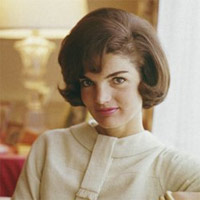
Jackie Kennedy (1961)
In 1961, manner was all about the costume look. The fashionable adult female liked to go out in the evening dresses in an expensive simply just cut dress known affectionately as "little nothing." She never left home without an elegantly styled bouffant hairdo.
Oval shaped shoulders and tapered hemlines were being replaced by straighter, wider shoulders, accompanied by a gentle inward curve at the midriff and a flare at the hem.
Many designers created "the look" past designing not just the dresses, but also the hats, shoes and even makeup of their mannequins.
Skirts had risen to the middle of the kneecaps, but by the cease of 1961 only the very young continued to article of clothing them short.
The barber was of farthermost importance in 1961. Beehive coiffures adorned by the likes of Princess Margaret, Jacqueline Kennedy and Brigette Bardot were imitated by women of all ages.
The bias cut gave a new fit to clothing, while keeping the comfortable softness women had to come to dearest. The bias skirt added grace and flare, while bias bodices molded the torso without feeling too tight.
The "petty nothing" dress was called then for its simplicity. Information technology was almost always sleeveless and slim, with low blousing or in a loose chemise shape recalling the flapper dresses of the 1920s.
The high rounded hat and the low, square-toed shoe were the accessories of choice. The elementary pump of dogie, alligator, crepe or satin was worn morning and nighttime, and the women of loftier way wore heels of medium superlative, even with ball gowns.
Fashion in 1962
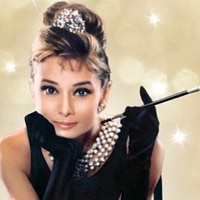
Audrey Hepburn helped popularize the high-bosomed, sleeveless dress in 1962
1962 was marked past subtle, yet meaningful changes. The silhouette became slightly more course-fitting, but the lines didn't effort to accentuate curves.
Shoulders were widened and the bosom received more attention. The waist was always accompanied past a belt, sash or wide inset bias band.
Costumes dominated evening wearable, consummate with matching jacket or wrap. Later on in the season the long, tweed dinner glaze was showcased in several high-fashion collections.
1962 more often than not focused on 3 styles:
1.) Sleek and slender
two.) softly bloused with muffled neckline
3.) "natural" outline, which fell in a unproblematic, class-fitting line
Greater choices allowed women to limited their individuality.
1930s-style clothing came back in style, sparked by the ascent popularity of erstwhile movies revived on television.
Dress created by Hubert de Givenchy of Paris for Audrey Hepburn in Breakfast at Tiffany's were given the lion'due south share of credit for bringing into style the high-bosomed, sleeveless wearing apparel.
Irene Sharaff's Egyptian costumes for Elizabeth Taylor in Cleopatra inspired dresses and jewelry.
A young designer by the name of Yves Saint Laurent, who had recently left the Firm of Dior, successfully opened his own establishment.
The mode world once again was crazy for Jackie Kennedy. Her gentle, high-bosomed coats and dresses, slender evening dresses, berets, breton hats, her impeccable jewelry and even her sports wear consistently dominated fashion headlines.
Style in 1963
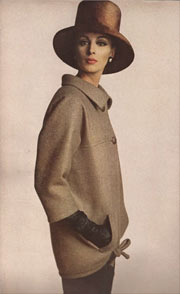
Although first shown in 1962, Saint Laurent's fisherman'south shirt jacket was near popular in 1963.
In 1963, the young wait swept through the fashion world like a great seismic sea wave. This expect included knee-high skirts, sleeveless dresses, lower heels and close-cropped, natural hair.
Any blazon of artificial look was abandoned quickly. Big amounts of makeup and high heels were too contrived for the fashionable adult female of 1963.
Tweeds, mohair, leather and furs were the rage. Boots ranged from ankle to thigh-high.
Vests, kerchiefs, textured cotton stockings, turtlenecks and paisley ascot scarves all came together to create a "sportive look." The phrase became the motto of 1963 way.
Fur-trimmed suits and coats were the most prevalent items in fall fashions. Ii preferred furs were lynx and kit fox — long haired furs were dorsum in fashion. Leopard, however, was the leading fur of all of them.
The most drastic alter in men'south manner in 1963 was the widespread acceptance of pleatless pants. Stripes were seen on sports jackets, sweaters, shirts and ties. The three-push button accommodate was the well-nigh pop, simply the two-button adapt was gaining fast. Men of means liked a soft Italian-fashion shoe.
Norman Norell and Cristobal Balenciaga were responsible for the reappearance of capes, while Yves Saint Laurent'due south fisherman shirtjackets became world-wide mode. In 1963, we get to see the beginning Geoffrey Beene drove.
Mode in 1964
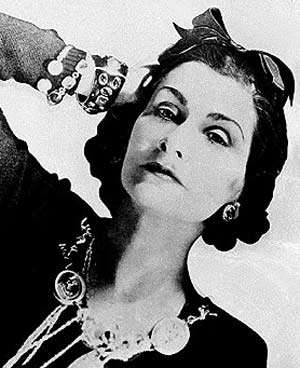
Coco Chanel wearing a hair bow
Fashion in 1964 was hit past a shock wave of nudity that extended around the globe and acquired world-wide controversy. Start came the deeply plunging necklines introduced in Paris spring collections. Then came the American versions, attributed to the movie, Tom Jones. The wave reached its crest with the creation of a topless bathing suit by designer Rudi Gernreich.
Clothes manufacturers speedily jumped on the bandwagon, creating sheer-topped evening dresses with only the flimsiest layer of mankind-colored internet used for a bodice.
The topless bathing conform created all kinds of problems. A adult female in Chicago was arrested for wearing information technology in public. Throughout the summer, comments concerning the controversial blueprint were published effectually the globe.
"Feminine" was perhaps the most overworked word in 1964's mode colloquial. It referred to swinging, knee-high skirts, fitted bodices, ruffles, pleats, a lace revival and the return of the pilus bow as the coiffure accessory for women of all ages. "Coco" Chanel was responsible for the hair bow revival.
The cosmetics industry reflected the frail, feminine expect that had come into style. Stake lipsticks and nail smoothen replaced the bright shades for the sought after natural look. Hair was no longer curly, just but waved to follow the contour of the head. Countenance brushing bangs became the trademark of the immature, along with hair bows work forepart, rear and off-eye. Girls with pilus too curly besieged hairdressers known for the straightening techniques — a chemical session that toll somewhere in the neighborhood of $40.
Textured stockings were very popular in 1964. Winter also saw the revival of fuller skirts, smaller coiffed heads under close-fitting hats and the return of the ball gown.
For men, the accent was on youthful appearance. Suit colors were lighter and brighter. Suit coats and sport jackets were shorter, with wider lapels. Trousers were often uncuffed. A wider stripe appeared on shirts and striped were popular in sweaters.
Style in 1965
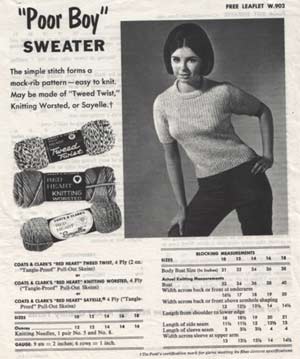
Vintage Poor Boy Sweater Advertising
The mood of mode was immature in 1965. Andre Courreges, the young French designer of the bar knee, the square cut white dress and flat white boots, offered the freshest and boldest look. He borrowed the cowboy hat — chin strap and all — to top the geometric looks of his clothes. White textured stockings epitomized the trend. His ideas influenced nearly every facet of fashion.
A style revolution broke out in London, and for the the outset time a British fashion invasion stormed NYC.
In the US, Pop Fine art popped into style. Then along came Op Fine art, which opened upwards a whole new earth. Women dressed to match Op Art paintings, with their stripes, checks and wavy line prints. Dressed were divided geometrically past intersecting bands and brightened by contrasting blocks of color.
The Mondrian style was a hit.
Rounded toed shoes became more than prominent. Straps were evident, heels were open, sides were pared downward to add to the look of leggy immature elegance. Heels continued in the low to medium height range.
Nosotros cant forget about the "Poor Boy Look." Women continued to habiliment depression hipster pants in combination with the "poor male child" sweater (meet picture).
Some other fad caught on in the dressing gown space. Cristobal Balenciaga designed a gown with 1 blank shoulder and it caught on like crazy. Even Jackie O got into the mix.
The Saint Laurent Mondrian dress was a huge striking in 1965.
Fashion in 1966
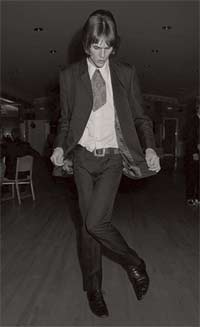
1966 Modernistic style
Fashion designers revolted against tradition in 1966. The thunder was start heard in England, where a youth rebellion resulted in massive profits for mod designers. Although the flames of way rebellion sparked in London in 1965, it spread like wildfire in 1966.
What is mod style?
The mod expect required mini skirts and pale colored fishnet or lacy textured hosiery, cut-out low heeled "little girl" shoes, mannish jackets, and ties. Accessories included over-the-shoulder handbags and gaudy jewelry, which ranged from antique pins (similar Bakelite pins) to mod styled geometric earrings.
Young men as well went Modernistic via low slung, wide belted, skinny, fitted pants, to which they added actress-broad, flashy printed ties that contrasted with the wallpaper floral prints of their shirts.
Boots, vests, London caps and narrow Carnaby jackets were also worn by the young men who took function in the rebellion against traditional men'south clothes and conservative means.
American youth became infatuated with the exotic, off-trounce image, using it every bit a ways of differentiating themselves from the developed generation.
Miniskirts were adopted to more conservative styles with the length modified to 2 inches above the knee. The new curt-brim fashion resulted in mixed emotions everywhere.
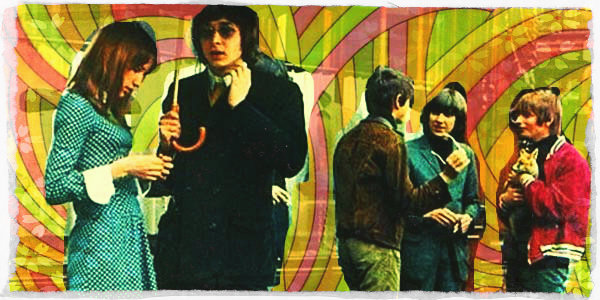 Women borrowed accommodate styles from men. They wore directly legged pant suits, often of what was traditionally men'southward fabrics, for daywear.
Pant suits were an acceptable means of fashion and were worn everywhere.
The military look was as well popular. Ground forces pockets, contumely buttons, epaulets, and trench coat treatments were featured on coats, suits and sportswear.
Newspaper dresses were introduced in 1966 by designers such every bit Judy Brewer.
Fashion in 1967
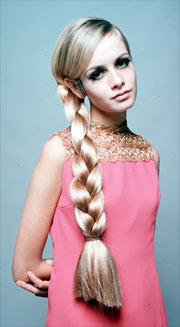
1967 Fashion: Twiggy was a fashion sensation
In 1967, way fell in love with the leg. Brusque skirts worn higher above the knee gave legs exposure they hadn't seen in years. Women took reward of the extra leg room by pulling on some colored and patterned hose.
Women likewise wore peekaboo fishnets, spidery weaves and lace. Non but did they provide smoothness from hip-to-toe, but they too eliminated the possibility of garter show.
Women also fancied high boots every bit a fashionable way to encompass up their legs. High-rise stretch vinyl and patent leather provided a glove-like fit. They likewise wore shiny blackness and brown boots that stretched to the knees.
Youth connected to set the pace for fashion. The belt did non define the waist anymore, instead it created a new "fit and flare" attitude.
In improver to leg, the fashion world fell in honey with Twiggy, the skinny 17-year-old British model who burst upon the scene, adorned every mag cover and brought the age of the mini-mod to the forefront.
Her success was controversial at the time. To some, she was an insult to the female person effigy, while other lavished her fresh, new look. Her slightly androgynous await blurred the lines between genders.
Some other interesting evolution in 1968: hardware. Accessories consisting of metal squares, nailheads, rattling chains, zippers, brass buttons, clamps were something new. The chain chugalug was another important accessory.
In men's fashion, the mood departed somewhat from the mod of Carnaby Street, but the British look was still evident. Turtleneck sweaters were an important tendency, eliminating the demand for a tie. The more than daring sported a turtleneck under dinner jackets for a casual elegance.
Fashion in 1968
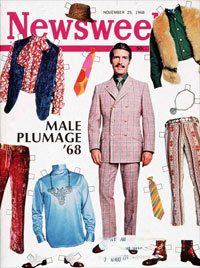
1968 Fashion: Newsweek cover: Male Plume '68
In 1968, the manner industry was stripped of its dictatorial power by a revolutionary assertion of individualism.
The take hold of phrase "practice your own thing" was put into practice when women and men decided they no longer had to adhere to what designers put in front of them. People were creating their own styles to friction match their personalities and mood.
Accessories dominated the outfit, often times overpowering the dress in importance. The new attitude was a reaction to the mini-dress of recent years, whose lack of textile alone gave women less manner real manor to piece of work with.
Western-type shirts were very popular with the younger crowd. Women would tuck them into Dirndl skirts for a fun look.
The midi skirt was the manner world'south answer to the long skirt that women wore against the designers' wishes. Unfortunately for the manner world, the midi skirt never caught on. It concluded up being ane of the biggest misses in contempo fashion history.
The Bonnie and Clyde pic triggered nostalgia for the 1930s. Pinstriped suits and gangster hats were popping up here and there, looking like they walked correct off a catamenia pic set up.
The most colorful, loud and expressive trends evolved from the outfits scavenged from thrift stores by hippies. Even affluent women adopted the hippie look in lavish fabrics, furs and jewels. It was a nomadic mix of ethnic and legend-inspired garb. Gaucho pants, meditation shirts and, especially, vests.
Some way trailblazers wore Pocahontas dresses complete with Native American headbands.
Paris finally had to accept what had happened. Designers could no longer pay the bills designing for the affluent. Saint Laurent led the way with his prepare-to-vesture collection. Balenciaga shocked the mode earth with his retirement in May.
Pants, celebrated for their versatility, were getting wider legs and softer. Women loved topping them with a colour, ethnic-inspired tunic.
Male fashions in 1968 reflected the growing tendency to mix and friction match a wide variety of materials, styles and accessories. It was an heady fourth dimension in men'due south fashion.
Tailored suits gave way to a unprecedented array of daring styles. Men wore turtlenecks, Nehru jackets and jeweled pendants. Fifty-fifty bright madras plaids were challenged by the flower-splashed resort blazers and P.J. (Lilly Pulitzer) jeans.
Style in 1969
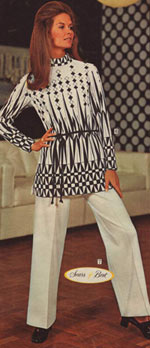 In 1969, manner stretched, softened and became even more body witting. A adult female wanted to look lean, linear and long.
The sometimes funny, frequently edgy and virtually always mini-skirted girl of recent years grew up. Her way image became more feminine, sensuous and sophisticated.
She wore softer, clingier clothes. Sweaters and sweater dresses at present hugged every office of her figure, specially around the ribs, waist and hips.
Higher up all, she had freedom to chose from an unprecedented variety of hemlines.
Instead of choosing a hemline, designers gave women the choice. Both in Paris and in the U.s., couturiers showed maxi-lengths, but were aware of sales plenty to keep some styles brusque. Yves Saint Laurent made waves with his "lowdowns", while skirts at Courreges barely covered the torso.
No matter the hemline, outfits were often topped with a jacket or long coat.
The long, lean line was the almost obvious way tendency in 1969. "The Skinny Sixties" closed appropriately equally women looked for clothes that would give them a tall, slim body. Elongation was accomplished by extended skirts, long, directly-cutting pants or, if she had long legs herself, they were accentuated past sheer dark tights.
Slender tunics, skinny long sleeves, low-ascent pockets and belts, hip-hiding weskits and torso-length cardigans helped fight a top-heavy look. The more fringe the better.
People too loved to wear super-scarves. Oblong in shape, some were 10 feet long, called Isadora Duncans. Long, fringe adorned shawls mimicked pearls. Feather boas, cherry fox stoles, and mink tails extended the silhouette by descending below the hemline.
Accessories flourished in fantasy, peculiarly with young people. They couldn't beget diamonds, then they enjoyed linked metals, chainbelts, tassels, snake rings, ophidian bracelets and arm bracelets.
In addition to new fabrics that did nothing to hide the figure, designers splashed color all over them. Tie dye and ink-splatter had cleaved into the mainstream.
Patchwork, Persian and Navajo rug motifs were seen everywhere. Intense primary colors turned subtle in the fall. Majestic was a hot color in late 1969.
Because women were condign more traditionally masculine (wearing pants) and men were becoming more than traditionally feminine (wearing bronzing gels and moisturizers), the term "unisex" was coined for fashion styles that both men and women could enjoy equally.
1960s Women's Style Pictures
CLICK IMAGE TO ENLARGE
1960s Men'southward Manner Pictures
CLICK Prototype TO ENLARGE
0 Response to "60's Shirt Wide Sleeves 60's Hippie Fashion Tumblr"
Post a Comment