Game Theoretic Analysis of a Multi-period Fashion Supply Chain With a Risk Averse Retailer
What is a Supply Chain?
A supply chain is an entire system of producing and delivering a product or service, from the very beginning phase of sourcing the raw materials to the terminal commitment of the product or service to end-users. The supply chain lays out all aspects of the production procedure, including the activities involved at each stage, information that is being communicated, natural resources that are transformed into useful materials, human resource, and other components that go into the finished product or service.
Why Should A Company Sympathise Its Supply Concatenation?
Mapping out a supply chain is one of the critical steps in performing an external analysis in a strategic planning process . The importance of clearly laying out the supply chain is that it helps a visitor define its own market and decide where information technology wants to be in the hereafter. In developing corporate-level strategies , a company oft needs to make decisions on whether to operate a single line of business or enter into other related or unrelated industries.
Each phase of a supply concatenation is essentially a different manufacture, for example, raw fabric extraction and manufacturing. The supply chain enables a visitor to understand others that are involved in each of the stages, and thereby provides some insights on the attractiveness or competitiveness in industries the company might desire to enter in the future.
Supply Concatenation Examples
Let's expect at two different examples of a supply chain.
Generic Supply Chain
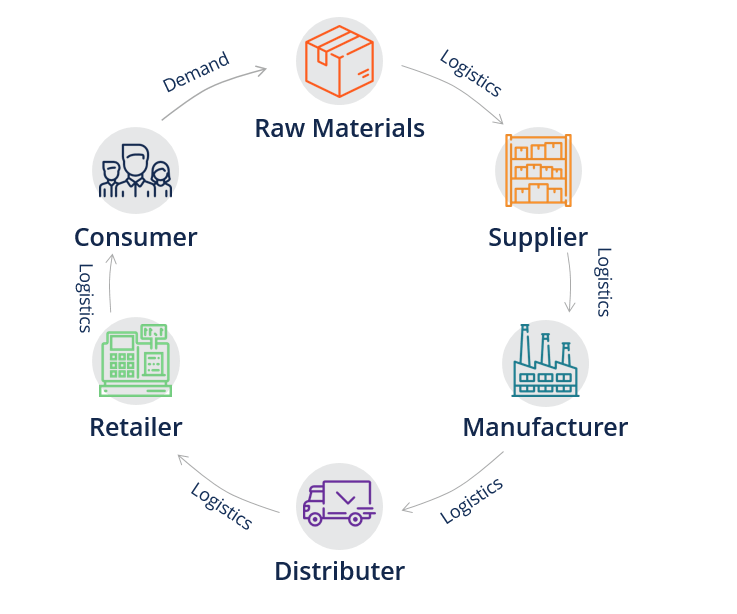
The generic supply chain begins with the sourcing and extraction of raw materials. The raw materials are then taken by a logistics provider to a supplier, which acts as the wholesaler. The materials are taken to a manufacturer, or probably to various manufacturers that refine and procedure them into a finished product.
Later, it goes to a benefactor that wholesales the finished production, which is next delivered to a retailer. The retailer sells the product in a store to consumers. Once the consumer buys it, this completes the cycle, simply it's the need that then goes back and drives the production of more raw materials, and the bicycle continues.
Supply Chain for an e-Commerce Visitor
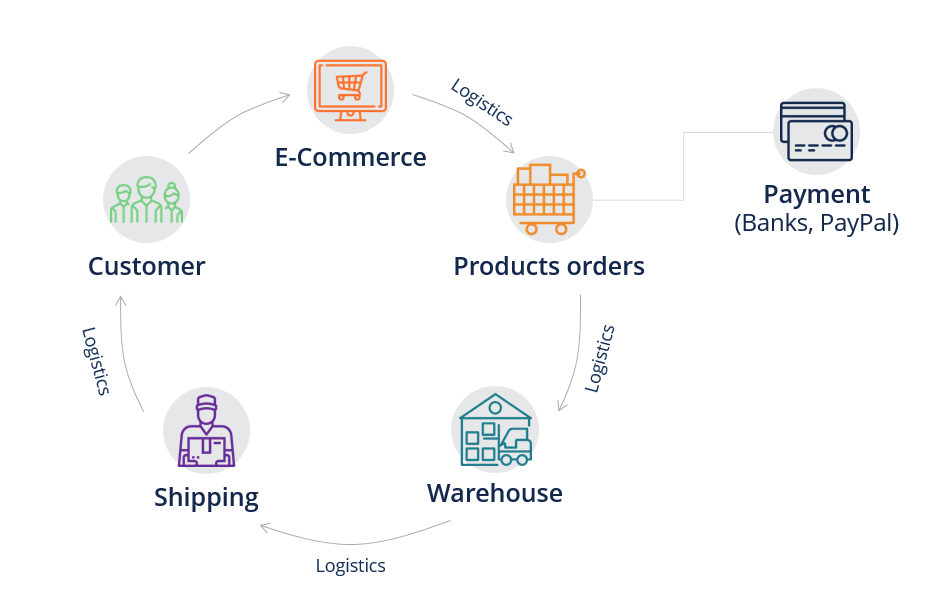
In this case, the e-commerce company operates a website, and that website sells various products. When a customer places an order for a product, the product lodge is beingness candy by engineering such as a checkout cart, an club system, or a third-party production such as Shopify. The payment processors then come in and deal with payment transactions for the order, which really opens upward a new supply chain.
The payment processors use their own systems just, in most cases, 3rd parties such as PayPal and Stripe are employed, and they involve banks and other providers. When a product order is placed, the warehouse receives the order and ensures the product is set up for commitment. The warehousing company tin be either in-house or a third-party logistics provider.
The club so goes from the warehouse to the shipping company. Once once more, the shipping may be in-firm or a third-party shipping company. Afterwards shipping, the package arrives at the customer's door and the client receives it.
More Related Resources
Cheers for visiting our resource on supply chains. To learn more than nigh external assay and how to perform strategic analysis, enroll in our Corporate & Business Strategy class today!
Additional relevant CFI resource include:
- Bargaining Power of Buyers
- Bargaining Power of Suppliers
- External Analysis
- All Strategy Resources
0 Response to "Game Theoretic Analysis of a Multi-period Fashion Supply Chain With a Risk Averse Retailer"
Post a Comment